
Preparing For An Elevated Deck On A Sloped Overland Park Lot
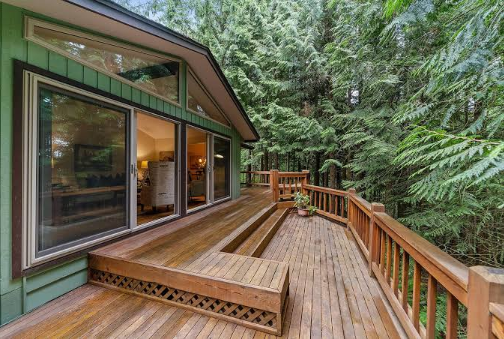
Ask the HOA what it will allow. Ask a deck contractor Overland Park KS homeowners trust what the slope will allow. Those two answers decide the deck you actually get to build on a hillside lot inside a covenanted subdivision, and neither one comes from a magazine photo. Skip them and you pay a designer in March, then redraw the whole thing in June. An elevated deck on a graded lot is an engineering job before it is a decorating job. The checklist below is preparation, not decoration.
Check The HOA Covenants Before Drawing Plans
Covenants come first because they are the cheapest thing to fix. Most Overland Park subdivisions on rolling ground carry rules on railing style, stain color, screening under an elevated frame, and how close a structure may sit to the rear setback. Read the architectural review section line by line, then send the board a dimensioned sketch before anybody orders lumber. Approval is not instant. A board that meets once a month can push a spring build into July without ever saying no.
Material choice is usually where the covenants and the budget collide. A February 2026 decking breakdown from Decks.com puts composite at roughly $10 to $15 per square foot for material alone, which is real money across a large elevated frame. The tradeoff is a decade of skipped sanding and staining. Boards that require one uniform color across a neighborhood tend to push homeowners toward composite whether the budget was ready or not. Pressure treated pine costs less on day one and more on every Saturday after that. Price both, then decide.
See also: Importance of Medical Assignments for UK Nursing Students
Check How The Slope Sets Your Footings
Grade is what turns a weekend project into a structural one. On a lot that drops six or eight feet across the footprint, the downhill posts get taller and the load concentrates at the bottom of the run. Footings have to be sized for soil that moves with the season. Johnson County clay holds water and heaves. The case we see most often is a homeowner who priced the job off a flat backyard estimate, then learned the uphill piers and the downhill piers are not the same animal at all.
Run the numbers before falling in love with a rendering. Take a 16 by 20 deck, 320 square feet of surface, sitting eleven feet off grade at the low corner. Nine footings dug to 36 inches at $185 apiece comes to $1,665, composite decking at $12 per square foot adds $3,840, and the framing lumber, hardware, and stair run push another $4,200 onto the stack. Call it $9,700. Honestly, closer to $11,000 once an inspector asks for larger diameter piers downhill and the guardrail run turns out longer than anybody measured. Those are illustration figures rather than a quote, but the shape of them holds.
Check Elevated Framing Against Fall Risk
Height changes the stakes, and it changes them fast. A deck sitting more than ten feet off grade needs guardrails at code height, footings engineered for the slope instead of guessed at, and a ledger connection through bolted and flashed the way the manufacturer specifies. Have it inspected before anyone stands on it. If the walking surface lands more than 30 inches above grade, plan on a guardrail and a permit set from the first sketch. Below that line there is more freedom. The Overland Park permit desk is the one to confirm with, because local amendments vary and a neighbor’s memory of the rule is not a code reference.
Any deck contractor Overland Park KS homeowners bring out to a hillside lot should be able to explain the load path out loud, from railing post to beam to pier. The same attention matters years later. A deck safety inspection guide published by Currituck County, North Carolina puts a number on the test: decay is present if a screwdriver probe penetrates 1/4 to 1/2 inch or the wood feels soft and spongy. A deck in that condition should be professionally inspected before anyone uses it again. Rot at eleven feet is a different conversation than rot at eighteen inches.
Ask Every Contractor These Five Questions
Bids on a hillside deck swing wildly, and the spread usually says more about what each builder intends to skip than about markup. Ask the same five questions of everyone who walks the lot, and write the answers down while they are talking. Someone who has framed elevated decks on grade around this metro answers without hedging.
- How deep are the footings on the downhill side, and why that depth? A good answer names a number and ties it to frost depth and soil, not to habit.
- Who pulls the permit and who meets the inspector on site? A good answer puts the contractor on both, in writing.
- How is the ledger attached to the house and flashed? A good answer names the fastener, the spacing, and the flashing product.
- Have you built at this height in an HOA subdivision nearby, and may I see it? A good answer comes with an address and a homeowner’s phone number.
- What happens to the schedule if the board rejects the railing design? A good answer says who redraws it and who absorbs the delay.
Silence on any one of those is an answer too. Watch the HOA question in particular, since covenant paperwork is unpaid time and the builders who resent it leave the homeowner arguing with the board alone. The grade calls the shots on a lot like this. The contractor who says so in the driveway is usually the one who got burned ignoring it.
Building It Right The First Time
Preparation is what makes an elevated deck boring, and boring is the whole goal. Choose the surface material with the covenants and the maintenance calendar both sitting in front of you. A study of treated Chinese fir wood plastic composites published in the journal Polymers reported a 47.58% gain in flexural strength and 25.00% in modulus from formulation and treatment. That is the sort of engineering behind the long service claims printed on a composite board. Then hire for the footings rather than the finish. A crew that gets the piers, the posts, and the ledger right has already built the part nobody looks at and everybody stands on.